
How Bond Repair Science Entered the Salon Industry
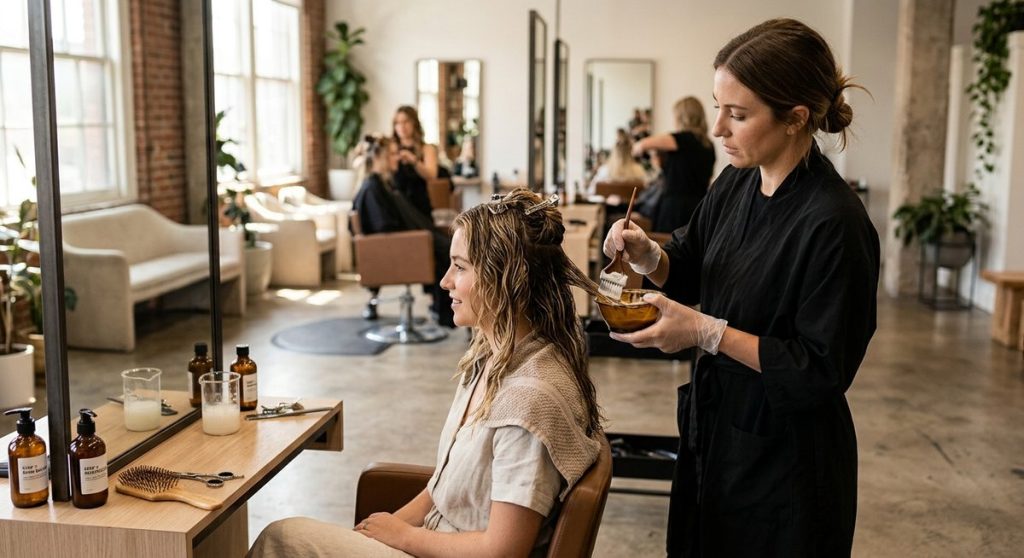
Bond repair science has steadily transformed the approach of stylists at Bloom Hair Studio over recent years, especially for those managing demanding services like bleaching, chemical straightening, and thermal styling. Working behind the chair, I’ve witnessed firsthand how clients’ expectations for vibrant, resilient hair have created a space where bond repair science isn’t just popular—it’s practically essential for us as salon professionals.
Before science, our toolkit for damaged hair relied mostly on surface-level conditioners and protein-heavy masks. However, repeated coloring, lightening, or perming eventually led to cumulative internal fiber damage that standard care couldn’t undo. In the early 2010s, a biotech breakthrough changed everything: chemists developed molecules aimed at restoring broken disulfide bonds inside the hair shaft. These bonds are critical for maintaining hair strength, elasticity, and resilience, but they’re easily disrupted by bleach, color, and heat.
Suddenly, the focus shifted away from masking damage toward molecular-level repair—a true paradigm shift for stylists and clients alike.
The Science Behind Bond Repair: What Happens Inside the Hair?
To really understand science, it helps to visualize what happens during hair treatments. The cortex of each hair strand is held together by disulfide bonds, which act like tiny bridges keeping the hair’s internal structure intact. When we lighten hair, apply relaxers, or use high heat, these bridges can snap. Traditional treatments don’t rebuild them—they simply coat the outside or plug gaps temporarily.
Bond repair products, however, deploy specific molecules (the most famous being bis-aminopropyl diglycol dimaleate, first featured in Olaplex) that target and relink broken sulfur bonds in the cortex. In other words, we’re now able to intervene where damage actually occurs, not just on the surface. This is why clients notice tangible improvement in hair strength and texture after in-salon bond repair services at Bloom Hair Studio.
How Salon Professionals Integrate Bond Repair Science
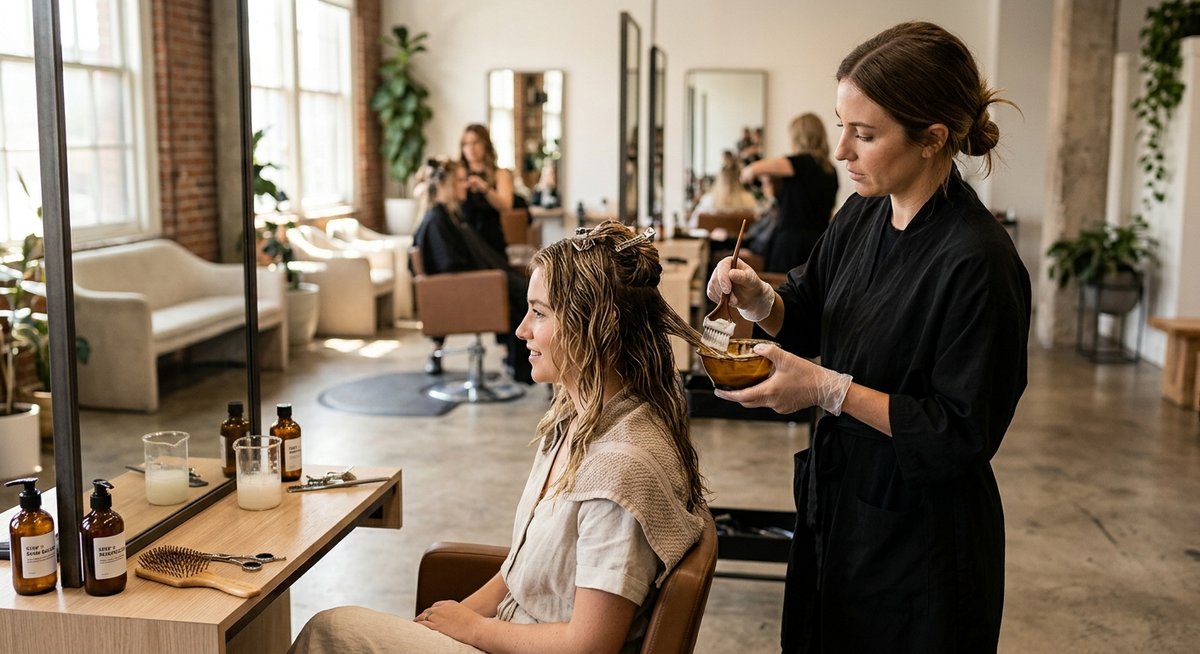
Most stylist teams at modern salons, ours included, now use science as a preventative and corrective measure. For example, when a client requests platinum highlights, we automatically add a bond builder directly into their bleach mix. This doesn’t interfere with color results—instead, it minimizes brittleness and breakage, making it safer to reach those icy tones.
Beyond lightening, we rely on these products during keratin treatments and chemical relaxers. Even heat styling appeals to clients’ sense of security when we explain that science can help fortify hair against future stress. It has changed so many conversations in the salon; where we once managed expectations around unavoidable “processing damage,” now we explain how we’ll proactively protect hair’s structural integrity.
The Evolution of Bond Repair Ingredients
The first wave of bond repair products was driven by a few proprietary ingredients, but the landscape has quickly diversified. While Olaplex remains a flagship, brands like K18 and Redken have developed their own patented molecules and proteins designed for in-salon and at-home care. These newer formulas claim to work on multiple types of bonds, not just sulfur bridges, and some blend peptides for deeper fiber restoration.
At Bloom Hair Studio, we don’t lock ourselves into a single line—we critically assess claims, check ingredient transparency, and test on a variety of hair types. This pragmatic approach has helped us avoid fads and responsibly integrate innovations that truly deliver results for clients. Learning from ongoing research, such as the chemistry explained by the National Institutes of Health, keeps our services state-of-the-art.
Is Bond Repair Science Safe and Suitable for Everyone?
While enthusiasm for science runs high, there are nuances to consider. Most formulas are safe for treated and untreated hair—some have even been tested on sensitive scalps. However, results aren’t always uniform. For example, hair that’s severely compromised (think: overlapping bleach jobs) may need multiple treatment rounds and ongoing aftercare. Clients with fine or “virgin” hair sometimes experience little dramatic change, because their internal structure is largely intact.
We always conduct thorough consultations at Bloom Hair Studio to match the right service with the client’s goals and hair history. It’s also worth mentioning that bond repair is not a replacement for fundamental hair care—regular trims, gentle detangling, and controlled heat remain essential for lasting results.
The Impact of Bond Repair Science on Salon Practices
For stylists, science has also changed our workflow. Treatment steps require precise timing and measurement; overuse can sometimes lead to unexpected textural differences. Integrating these services also adds cost and time to appointments, so honest communication and price transparency are critical. However, the payoff is substantial: higher client retention, greater trust, and the ability to push creative boundaries without the old fear of catastrophic damage.
Moreover, education is key. At Bloom Hair Studio, our staff regularly attends advanced training to stay updated on the best techniques for bond repair integration—this ensures we achieve optimal results whether we’re lifting natural hair five levels or simply fortifying it after sun exposure.
Client Conversations: Setting Expectations Around Bond Repair Science
Clients are often curious about how and why bond repair works, and these conversations help set realistic goals. We explain that while the technology is sophisticated, it’s not “magic.” The most dramatic improvements show on hair that’s been heavily processed; for hair with minor damage, the effect may be more subtle, like increased smoothness and manageability. Regular treatments multiply benefits, but long-term resilience still depends on how clients care for their hair at home—gentle sulfate-free shampoos and heat protection are non-negotiable.
The Future of Salon Treatments Inspired by Bond Repair Advances
science is rapidly evolving, and as more research is published, we expect even more targeted and effective solutions to hit the market. Companies are experimenting with various peptide complexes, plant-derived molecules, and even low-molecular-weight hyaluronic acid for deep hair hydration. For salon professionals, this means ongoing learning—and for clients, ever-better results as these innovations trickle into mainstream hair care.
At Bloom Hair Studio, we’re committed to blending experience with scientific advances so every client gets the best of both worlds: classic salon expertise and cutting-edge bond repair treatments. As the science develops, so do our consultations, techniques, and results.
References and Further Reading on Bond Repair Science
- National Institutes of Health: Oxidative Hair Damage Repair
- Allure: How Bond-Building Treatments Work
By understanding the origins and practical science of bond repair, salon professionals and clients at Bloom Hair Studio are better equipped to make informed, confident hair care decisions for every service.