
Professional salon color: Matching Color Longevity to Client Goals
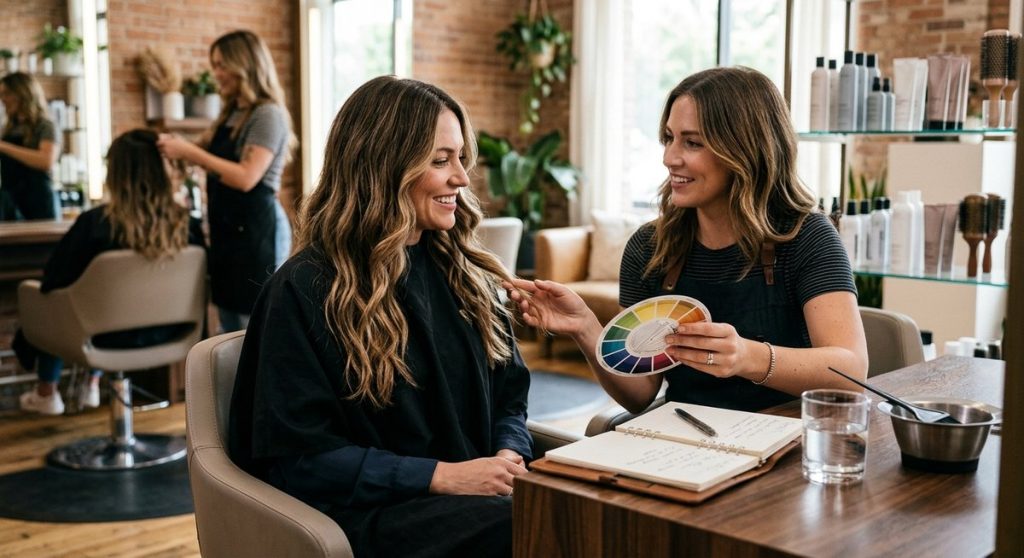
Clients visiting Bloom Hair Studio often ask about professional salon color options. What really matters is matching the color type—permanent, demi-permanent, or semi-permanent—to your client’s needs and hair history. The decision isn’t purely about shade; it’s also about lasting power, maintenance, and how the process affects the hair’s health. Below, I’ll break down practical selection criteria and common scenarios for each color type based on salon experience.
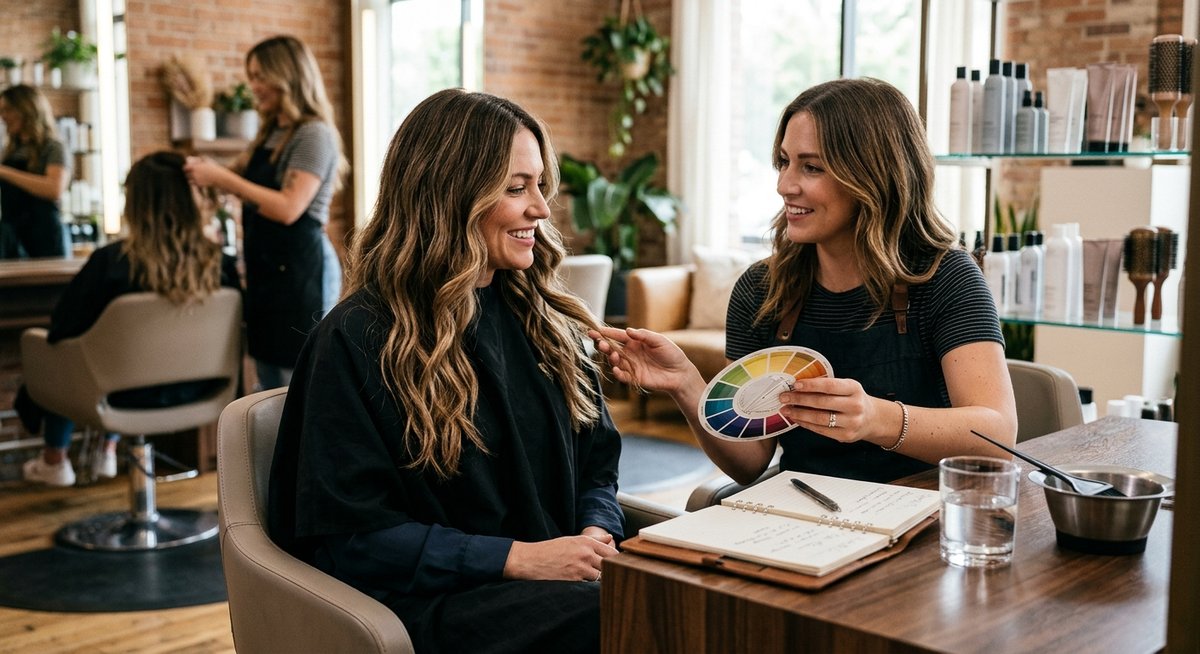
Before you reach for a tube of color, clarify how long your client wants the effect to last. For example, a client looking to cover greys completely, or craving a dramatic, long-lasting transformation, is usually best served with permanent color. In contrast, someone nervous about commitment, or interested in playing with fashion shades, will appreciate the flexibility of demi or semi-permanent color.
- Permanent color: Won’t wash out. Grows out with the hair, requires regular root maintenance. Best for clients who want lasting grey coverage, substantial lightening, or a base shift.
- Demi-permanent color: Offers up to 24–28 washes of durability. No harsh line of demarcation while fading. Good for tonal refreshing, darkening, or blending first greys.
- Semi-permanent color: Lasts about 6–12 washes. Provides a soft tint or bold accent that fades gradually. Suited for low-commitment color experiments or adding sheen.
Therefore, a big factor is your client’s comfort level with seeing pronounced regrowth or needing frequent touch-ups. Remind perfectionist clients, for example, that permanent color will demand a retouch every 4–6 weeks.
Choosing the Best Color Formula for Hair Condition — professional salon color
In practice, the current state of your client’s hair rules out some options from the start. For instance, highly porous, compromised hair does not tolerate repeated permanent color processing well. Even with bond builders, chemical strength adds up over time. In these cases, professional salon color decisions lean towards gentler demi or semi-permanent solutions.
- Virgin or healthy hair: More resilient, can handle permanent color changes, especially if lightening is required.
- Pre-lightened or damaged hair: Prone to breakage, so safer with demi or semi-permanent. These formulas contain less ammonia and peroxide.
For a guest with previously highlighted mid-lengths and ends (common in the studio), a color refresh should be demi-permanent to prevent unnecessary damage. Only apply permanent color to the natural regrowth if coverage or lift is essential.
Desired Result: Coverage, Enhancement, or Correction? — professional salon color
Another key distinction is what the client expects from their session. At Bloom Hair Studio, we regularly see three categories:
- Full grey coverage or base shift: Only permanent color achieves 100% coverage, making it the go-to for mature hair or clients moving multiple levels lighter or darker.
- Subtle enhancement or tonal correction: Demi-permanent fits best for toning highlights, deepening ends, or correcting faded color without visible outgrowth lines. It’s my go-to for blending early greys or enhancing natural depth.
- Fun and temporary bold looks: Semi-permanent is ideal for vivid shades, pastel tints, or festival styles. These clients don’t mind fading—they often want it!
Ask your client how adventurous they feel. Someone prepping for a big event versus someone who likes to change up their style every season will need different strategies.
Maintenance and Upkeep: What Can the Client Realistically Commit To? — professional salon color
The best professional salon color choice also depends on how much maintenance fits into your client’s routine. If they rarely return for touch-ups, steer away from permanent options that leave obvious roots. Many working professionals prefer demi-permanent color to avoid the dreaded “skunk stripe.” This can also be suitable for first-timers, teens, or those with a busy lifestyle.
Custom Scenarios: Real-World Examples from Bloom Hair Studio
Let’s ground this with a few studio cases:
- Client #1: Natural brunette, 30% grey, wants lighter hair and zero greys showing. We use permanent color for root coverage and a lightener for highlights. The ends get a demi-permanent toner for seamless color.
- Client #2: 20s, natural blonde, wants pale pink for spring but no long-term change. Here, semi-permanent pastel is the answer. She can return to blonde within weeks.
- Client #3: Middle-aged guest with faded highlights and fragile strands. Demi-permanent in a warm caramel shade refreshes her color with shine and minimal processing.
- Client #4: Busy parent wanting shiny brown but doesn’t want root touch-ups every month. Demi-permanent merges gray blending with easy grow-out.
Each of these decisions centers on the balance between desired result, hair’s integrity, and maintenance reality.
Classic Color Types in Comparison: Key Differences
| Color Type | Main Use Case | Longevity | Ammonia/Peroxide | Fade Pattern |
|---|---|---|---|---|
| Permanent | Full grey coverage, substantial shifts | Grows out, root line visible | Yes (strong) | Visible regrowth |
| Demi-permanent | Blend, tone, refresh, mild coverage | 4–6 weeks (fades gradually) | Low/no ammonia, low peroxide | Blends out, soft fade |
| Semi-permanent | Fashion, accents, gloss, shine boost | 1–3 weeks | No ammonia/peroxide | Fades to natural |
This at-a-glance chart lets you quickly assess which professional salon color might work in the chair based on what the client needs, how much their hair can take, and their aftercare enthusiasm.
When to Recommend Each Color: A Stylist’s Checklist
Permanent Choices: Pros and When to Use
- Clients with high grey percentages seeking 100% coverage
- Those seeking a dramatic base shift (more than two levels lighter or darker)
- Stable, low-maintenance guests content with root touch-ups
Demi-Permanent & Glossing: The Flexible Favorites
- Enhancing shine—or “glossing”—after highlighting services
- Camouflaging first greys without strong lines of outgrowth
- Refreshing mid-lengths and ends for even color
- Clients new to coloring or wanting a commitment-free test run
Semi-Permanent Color Solutions: Creative and Careful
- Fashion-forward clients wanting bold, pastel, or trending hues
- Teens or first-timers nervous about permanent results
- Condition-sensitive/previously compromised hair clients needing extra gentleness
As a general rule at Bloom, if I see hesitation about long-term results—or concern about hair health—I lean toward demi or semi-permanent choices first, reserving permanent color for those absolutely certain and committed to upkeep.
Client Communication: How to Explain the Differences
Clients appreciate short, clear explanations—especially when facing a wall of color options. I often compare demi and semi-permanent like a “trial run” or a “sheer lip gloss for your hair” while permanent color is more like a tattoo—it grows out, not fades out, and requires touch-ups.
For technical but client-friendly reading on ammonia versus non-ammonia color, or the science behind color molecules, share resources like the Haircolor.com explanations.
It’s also helpful to have visual shade swatches and strand samples at hand—showing how each color type fades and grows out over 4–8 weeks.
Final Takeaways: Making the Right Choice with Professional salon color
To sum up, choosing between permanent, demi, and semi-permanent comes down to how long the client wants it to last, the condition of their hair, their maintenance tolerance, and the desired effect. Always use a thorough consultation and take time to discuss both the technical side and lifestyle realities. At Bloom Hair Studio, our most satisfied clients are typically those who left with a color plan matched to these real-world factors—not just a trendy shade.
Prioritize condition, be honest about maintenance, and use your technical knowledge to guide them. That’s the art (and science) of professional salon color.